
The favelas of Rocinha
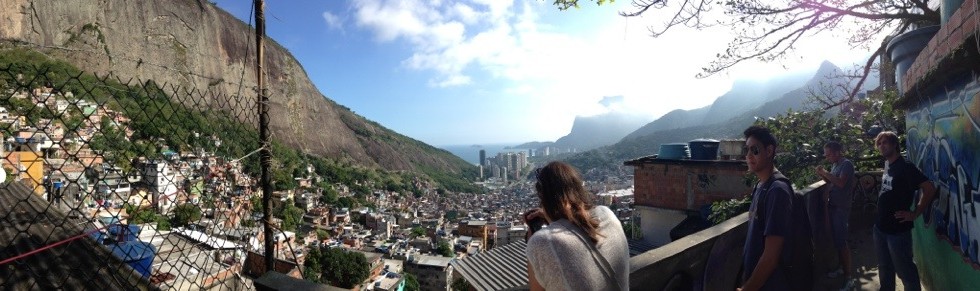
A day like today is the kind of day you hope for on a trip like this. Mind blown and expectations crushed I now know I have seen true poverty but also the pervasive ingenuity of humankind to build to survive in the harshest of places.
We travelled to the Rocinha favelas in rio and were escorted through the metropolis by our guide Archie, (could have been achi) our van turned up with blacked out windows and we made a few stops along the way picking up German (johanneus), Italian (emiliano) and two other Japanese turistas along the way. Johannous is in a band and Emiliano is an architect for Prada taking some time off from some work he had been doing in Sao Paolo.
Our van ascended into the hills of Rocinha as the landscape changed into the rundown shanties of this favela district. Rocinha is the biggest favela in Rio housing an amorphous two hundred thousand residents in this particular slum. We were told when and where to take pictures and were warned of the dangers in not doing so. Our guide led us through the sometimes claustrophobic favelas pointing out the best views and most shocking/mental points along the way. Cats lived alongside chickens in a testament to its diversity. Dogs lay in the cramped uneven walkways not stirring for us or the locals of the districts we walked through. Open man made improvised sewers carried fluid downwards and often we walked alongside streams running from the top of Rocinha to the bottom of the mountain. All human and animal life was there demonstrating chicks, puppies, kittens and babies all living next to each other in a cohesion of sorts. Young Brazilian boys flew home made kites whilst drinking red liquid out of glass jars and local artists flaunted their Warez in impromptu studios/gift shops.
An overwhelming density permeates the favelas making you wonder how anybody finds their way round. Our guide communicates how some locals are paid eight Brazillian reais by the postal service to deliver post in the labyrinth of shacks and buildings in Rocinha. Life seems extremely hard in the favelas but somehow through the spirit of the Brazillians it seems to be thriving. At points the smell is overwhelming and we do have to dodge animal faeces at multiple points. Often we see feats in which favela folk are dragging washing machines through the tiny uneven walkways (walkways is too organised a term) and I wonder how much further they have to go. The guide is keen to tell us about the regeneration projects and how they are planning a lift and a cable car to be built in Rocinha and can’t believe how there hasn’t been one installed since the inception of this favela in the 1930s. We are taken to prior hideouts and lookout points of favella drug lords and Archie points out bullet holes that missed their targets but scarred the walls of the favelas.
At times I feel uncomfortable as a tourist walking through the favelas being shown this extreme of poverty as existence. A goldfish bowl observation privilege that money has afforded us especially given the circumstances of our trip. Rio’s contrasts are on the surface and don’t try to hide. Archie points out the “Beverly Hills” of Rio which stands at the foot of the sprawling Rocinha favela.
We are encouraged to make donations to teenage locals who perform for us with makeshift drums made out of plastic food containers and tin boxes. Smaller children dance and smile helping to collect the donations from the western tourists.
As we are taking photos from a good vantage point Archie signals to our starting point which seems a long way away. The sound of a large but distant explosion echos around the valley of Rocinha. We look at Archie, he shakes his head, smiles and says:
“Bomb”
We continue our walk to the bottom of Rocinha.
The region is wild, organic and without doubt the biggest DIY project I have ever seen in my life.